A confronting new exhibit has popped up in central Melbourne, the centrepiece of a Transport Accident Commission (TAC) initiative aimed at changing relaxed attitudes to the deadly consequences of speeding.
Australia’s Deadliest Predator takes a novel approach to highlight the vastly higher number of speeding-related fatalities in Australia, compared with deaths caused by commonly feared wildlife – and leaves no doubt over what poses more risk to our health and safety.
Speeding is the leading factor in around one third of fatalities in Victoria and nationally, claiming 400 lives across the country last year and 4,100 in the past decade. By comparison, according to the most current available data, there were an average of six deaths a year caused by sharks, crocodiles and snakes in Australia between 2001 and 2021.
Despite this disparity, a survey of more than 1000 Australians conducted as part of the new TAC initiative, revealed that the majority of respondents perceive dangerous wildlife as more life-threatening than speeding.
When asked what they found to be ‘extremely dangerous’, 74.5 per cent of respondents said venomous snakes, followed by crocodiles (68.8) and sharks (61.8).
In comparison, only 11.2 per cent of respondents felt that driving 5 km/h over the speed limit was extremely dangerous.
That figure rose to 29.8 per cent when considering driving 10 km/h over the limit.
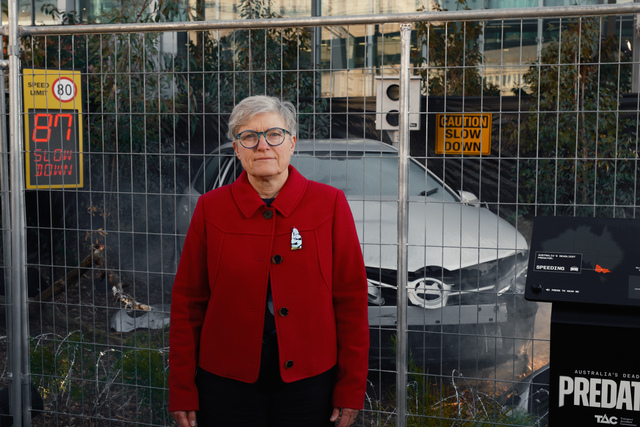
The exhibit, situated on the plaza between Melbourne Museum and the Royal Exhibition Centre, replicates a dangerous zoo animal enclosure to challenge common perceptions of danger, and prompt visitors to reflect on their own driving behaviour.
Behind the enclosure’s ominous black fence and jungle façade lies a powerful reenactment of a car that has crashed after losing control due to traveling over the speed limit. Signage highlights the speed limit, and a digital display shows the vehicle’s speed at the time of the crash, alongside other sights and sounds synonymous with an accident scene.
TAC chief executive Tracey Slatter said the commission’s research showed that too many people had a casual attitude to speeding, despite hundreds of speeding-related deaths and many more injuries every year.
“Australia’s Deadliest Predator unapologetically calls out the social acceptance of speeding in a novel way, which we hope will encourage road users to slow down and stay within speed limits,” Ms Slatter said
“The data and research are clear – speed kills, and the only way we can prevent the tragic loss of life is to drive within the speed limit every time we use our roads.
“We will continue to use thought-provoking initiatives such as Australia’s Deadliest Predator to drive home the dangers of speeding until we realise a future where no one dies or is injured on our roads,” Ms Slatter said.
Victoria’s road toll currently stands at 186, compared to 180 at the same time last year, with speed contributing to about a third of all fatalities.
Australia’s Deadliest Predator is open to the public for free between 11am and 7pm until Sunday, August 24.
Find out more here: https://www.tac.vic.gov.au/road-safety/tac-campaigns/deadliest-predator