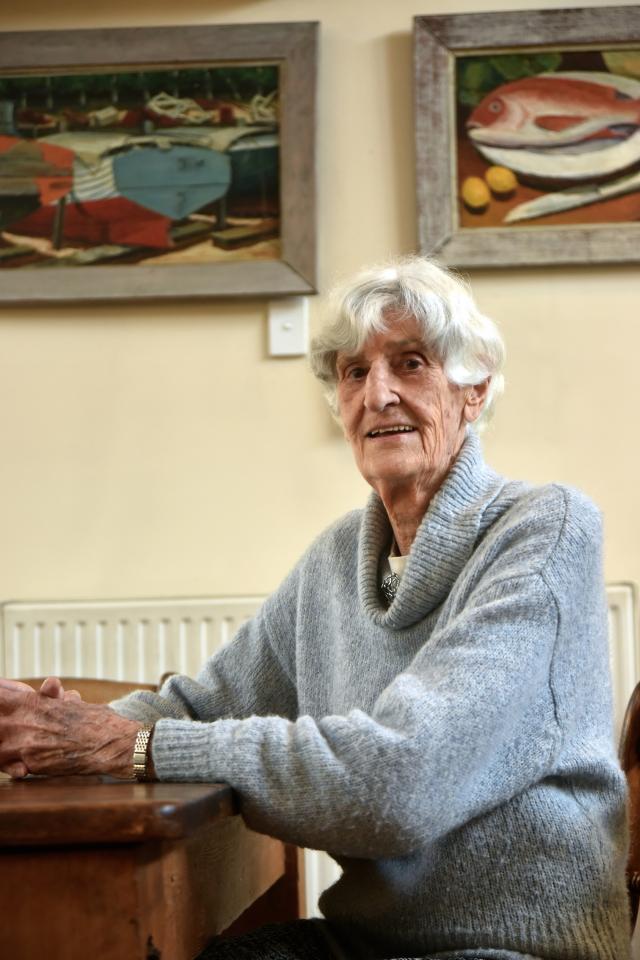
She was the trailblazing female architect who helped design some of Melbourne’s most famous buildings and later became synonymous with the wall coverings often found inside them.
Phyllis Murphy AM died on May 22, surrounded by children and grandchildren in Footscray Hospital.
She was 100.
It was the end of a very long life, which it needed to be, because the woman born Phyllis Slater in 1924 crammed enough into it to fill two or three more.
“She was bit a frail but she managed at home until the last week of her life,” said her eldest son Jock Murphy of his mother who lived independently in the same Williamstown house she moved into at the turn of the century, shortly before the death of her husband and fellow esteemed architect John Murphy in 2004.
By then the Murphys had left architecture behind, instead turning her attention to wallpaper, collecting vast amounts of the material used to decorate buildings long after the work of designers like them had finished.
Jock Murphy said this unlikely change came about when they retired to the country in the early 1980’s.
“At that stage, mum and dad were living in Kyneton and they became aware of an old painter and decorator business that was about to be demolished and had leftover wallpaper samples dating back to the 1850’s.
“ Mum and dad rescued the collection and then mum set about cataloguing it and because they were in a country town, people became more aware of what she was doing so samples were given to her as well, so the collection got bigger.”
So big and so significant was Phyllis Murphy’s wallpaper collection that it was eventually acquired by the Caroline Simpson Library at the NSW Museum of History in Sydney, where it can still be viewed today.
It’s an impressive achievement for a retired widow, but all the more so given the esteemed career in architecture that came before it.
“When she graduated from Melbourne Uni (with a degree in architecture) in 1950, there were 80 students in the year and there were two women,” said Jock Murphy.
Upon meeting and marrying John Murphy, the two became a formidable force in mid-century Australian architecture, with their crowning achievement coming in 1956 when they were part of the team that designed the futuristic swimming pool used for the Melbourne Olympics.
“Now it looks a bit modest but when it was built, it was a groundbreaking building,” said Jock Murphy of the Olympic Swimming Centre located next to the Yarra River on the corner of Olympic Boulevard and Batman Avenue that is now home to the Collingwood Football Club.
Phyllis Murphey AM is survived by sons Jock, Sam and Nicholas Murphy and grandchildren Sam, Harriet and Ned; Jacinta and Chris; Rose and Jack.
A celebration of her life will be held on Tuesday, June 10, her 101st birthday.
For more on the wallpaper collection go to mhnsw.au/whats-on/exhibitions/a-generous-gift-john-phyllis-murphy-collection/