The Western English Language School is providing the tools for young migrants to make the most of their new lives.
Hanibal Solomon arrived in Australia eight months ago as a refugee from Ethiopia in search of a better life. His father had been living here for six years so Hanibal left his homeland, and his mother, for a fresh start soon after becoming a teenager.
‘‘I came here to live. There are so many opportunities here,’’ he says with wide-eyed optimism.
Confident and bright, Hanibal had learned snippets of English at school back home and speaks the language freely. ‘‘That’s why I’m a little bit good at it,’’ he smiles, almost apologetically.
Like many newly arrived youngsters, the introduction to his education in Australia begins at the Western English Language School, a multicampus government school offering English as a Second Language (ESL) programs for primary and secondary students across the west.
Students stay from six months to a year, depending on their level of education. Hanibal is progressing well and will most likely be at the school for one more term before enrolling at a mainstream high school.
Alongside Hanibal is Tony, a 17-year-old from Indonesia who tells a similar story of moving to Australia to be with his mother and stepfather.
‘‘The first time I come here I was very happy,’’ Tony says describing his first impressions of his new home. ‘‘But after one week I was very sad because I lost my old friends. I miss them.’’
Tony wants to be successful in his education but is adamant he will return home to work and be closer to his friends, father, and grandmother.
Looking back, the Western English Language School, like the cultural mix of faces that fleetingly pass through its doors, has been resilient since day one. In the late ’90s its predecessor, the Tottenham English Language Centre, had been attached to Tottenham Community Secondary College.
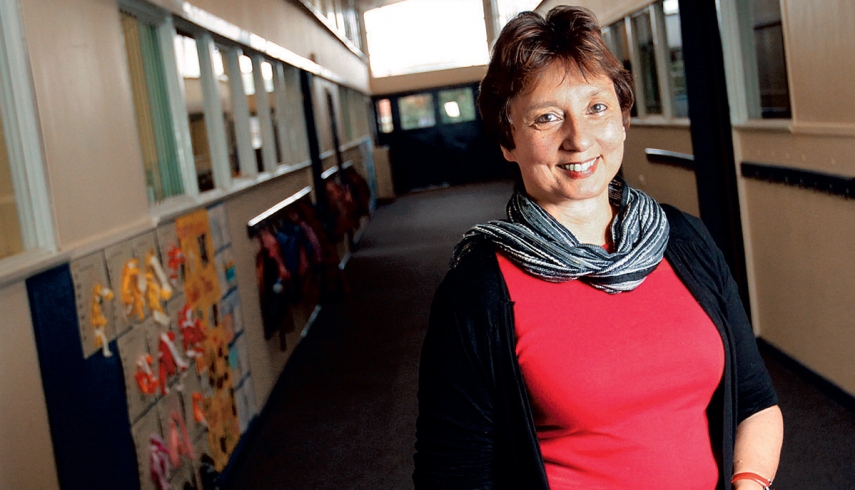
The college was involved in a merger and closed, leaving the language centre on its own with just five classes. Principal Yolette De Zilwa, a cheerful and kind-natured woman whom students greet warmly as they pass her in the corridors, led the charge to become a fully fledged school.
She had previously taught at mainstream schools but chose to gain ESL qualifications, realising many children from foreign backgrounds were being thrown in the deep end at mainstream schools without ever having being taught how the English language works. A successful 18 month-long campaign resulted in the Western English Language School being opened in 2000.
‘‘The western region’s got the second highest number of newly arrived migrants in Melbourne and there wasn’t a school here,’’ De Zilwa says. ‘‘It was wonderful for the parents and the communities who supported the whole push for an English language school. And it just made sense.’’
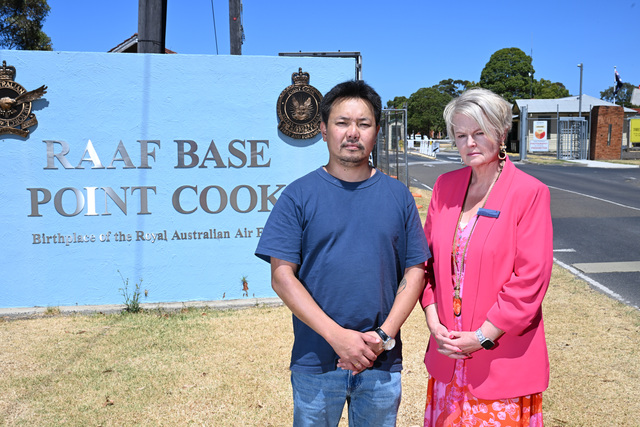
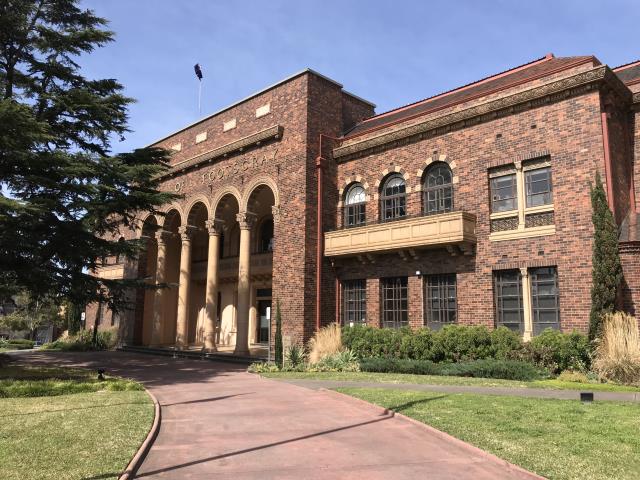
Today the school operates across five sites – Kensington, Footscray, Werribee, St Albans and Point Cook – and has about 500 students.
The world’s trouble spots are often reflected in the enrolment demographic.
‘‘If they have intact schooling, so they haven’t been in a refugee camp and they haven’t been in a war zone where their schooling has been affected for up to two years, they stay for six months,’’ De Zilwa says. ‘‘If they are a refugee and have had interrupted schooling, then they are entitled to stay for a year.’’
The school mirrors a mainstream school but with a focus on the English language. Students take part in English classes, history, geography, social studies, maths, science and physical education.
‘‘By mirroring what a mainstream school does they get the idea of what it’s like to be in an Australian classroom … the context, the culture, and the sorts of expectations that teachers have. A lot of emphasis is on what they bring with them, rather than they’re empty vessels and they have to learn all these things. They come from very rich cultures themselves and basically, that Australia is better for having them.’’
The school has 60 staff across its campuses, including 14 multicultural aids of various languages. De Zilwa says the school often encourages mainstream teachers to visit and see what it’s like for a child in their first phase of being in an Australian classroom.
‘‘An ESL teacher can actually see the mark of progress much more clearly than a mainstream teacher that is not clued in. You’ll see things like a child going through a silent period and not be worried about it. A mainstream teacher might say, ‘Ohhhh, that child isn’t talking’. It’s perfectly normal for a child from another language not to talk for a while and to be quiet in the classroom and to actually be absorbing a lot of what they hear and see. Then a few months later they start producing.’’
De Zilwa describes her staff as passionate in wanting to give newly arrived children the best start possible.
‘‘It’s more than a teaching job. I think it’s a calling. Because our numbers over the past seven to 10 years have been refugees, they have been very switched-on to the particular troubles that refugees bring with them and the challenges they have entering a new country.
‘‘It’s a huge thing. Somebody once said that there are three major things that can happen in your life: the birth of a child, the death of a member of the immediate family; or leaving a country. And for a refugee family they would have had all three.’’
Laurence Guttman has been teaching at the school for five years and still relishes the challenge.‘‘We get kids who are complete beginners and kids who speak [English] quite well, so the challenges are different. With complete beginners you have to do basic stuff, which can be a little frustrating for the teachers and the students sometimes, because you know the kids are capable of bigger ideas.’’
Today Guttman is teaching maths to a group of half a dozen students aged 13-17, predominantly of Vietnamese background, which presents another challenge.
‘‘What is difficult in this class, for example, is that 10 students all speak the same language, which isn’t ideal, because it’s obviously very tempting for them to speak their own language. I like to have more of a spread.’’
Guttman seems genuinely fond of his work but concedes he can take the kids only so far.
‘‘They’re all quite good at maths already, but their biggest challenge when they go to a mainstream school will be understanding both what a teacher says and written problems. It’s a little frustrating.
‘‘In South Australia, for instance, the kids get two years [at a language school], which makes much more sense. It’s just not enough time here to get to know them. They progress obviously, but if you teach a kid for a year you see a lot more development. That’s one of the more frustrating parts of the job. They’re constantly rotating the door with new kids coming in every term.’’
De Zilwa is well aware of the problem.
‘‘We’ve had quite a few success stories. And a few very distressing stories. The distressing stories are around whether we have been able to enrol them for long enough and they probably could have done with two years.
‘‘The older ones that have had interrupted schooling present the greatest challenge for mainstream schools because you might get them in 12 months from no literacy to grade 2 literacy and then they’ll go to year 9.
‘‘They’ll go into an age-equivalent class and they simply don’t have the skills to be able to deal with year 9 subjects. And it’s not their fault, but they take it personally. They quite often drop out of school.’’
Still, De Zilwa believes there is much hope for the future and the positives far outweigh the negatives. Asked if she feels she has achieved the vision set out for the school more than a decade ago, she replies; ‘‘I like to think so.’’
She points to a new assessment tool that gauges a child’s starting point and pinpoints their progress each term as one of the better results.
‘‘We were never able to do that. We relied a whole lot more on anecdotal data,’’ she says proudly. ‘‘For the first time we are actually able to confidently say what a difference our program makes to student learning.’’
Even so, De Zilwa is under no illusions. Some students will make it. Some won’t. It’s the real world out there.
‘‘There’s lots of schools in this area that have very strong ESL programs. It’s a matter of them landing in one of those schools. I don’t care how interrupted your schooling is. If you really work hard at it you can get there.’’ n