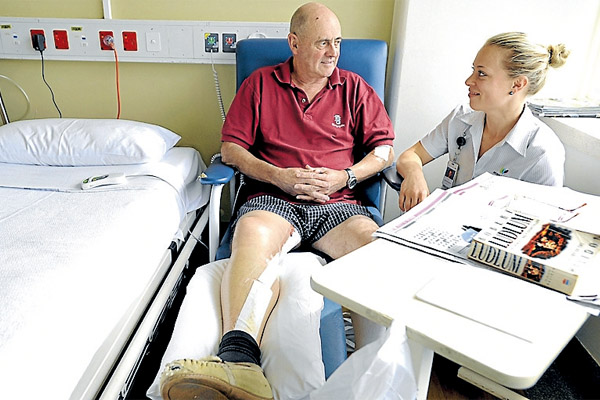
NURSES at Western Health are going back to the future to improve patient care, with a good old-fashioned smile and “hello” to lift spirits.
Patients are being visited each hour, with nurses checking on their pain, toilet needs, body positioning, general environment, and providing help with their plan of care.
The visits are aimed at making a patient’s stay more comfortable and pleasant. It was trialled in three wards in June last year and is now in place in 21 wards across Western Health hospitals.
The most recent annual survey shows patients’ satisfaction with care and services at Western Health’s Williamstown, Sunshine and Footscray hospitals has improved marginally on the previous year, although they have the lowest rating among the state’s large metropolitan hospitals.
Annual voluntary surveys ask patients to rate their time in hospital on services such as admission, care provided by doctors and nurses, complaints management, meals, physical environment, and discharge and follow-up.
Western Health’s Footscray hospital was given a rating of “good” with a score of 70.4 out of 100, up from 69.4 the previous year.
Sunshine’s rating improved from 68.3 to 69.1 and Williamstown climbed from 76 to 78.
Western Health redesigning care manager Karen Rog said the number of letters of complaint from patients had been cut by half since the new program was introduced. And the number of times patients rang the bell for a nurse had dropped from about 10 an hour to about two an hour.
“The care now is far more complex than it was 10 or 20 years ago and the hospital stay is often shorter,” she said.
“When nurses have to prioritise who they look after it’s the sicker patients who become the focus.
“It’s the patients getting better that say they need to see a nurse [but aren’t attended to].
They know and understand that the nurses are busy, but we’re trying to bring attention back
to these.”
Patient John Foster said hourly visits had made a “huge difference” to his recovery.
“They come around and ask me questions regularly, so I know what is going on and I feel very looked after.
“You couldn’t get through something like this without a positive attitude. That comes from the nurses and the other staff.”